A Hopkinsville, KY restaurant can draw on three kinds of funding source: banks and credit unions, equipment lenders, and providers of card-sales advances. A food truck, a mixer and a short cash need each point to a different one of them. A restaurant owner can describe the cost once to Rowanharbor Finance; the independent funding partners who see it make any offer.
Three invented cases, one per source: a sit-down restaurant’s food truck on a 72-month loan, a mixer and dough sheeter on a 36-month equipment loan, and a card-sales advance collected from a kitchen that also takes cash. A last table sets the three invented cases side by side as cost per $1,000 received. Every dollar figure is made up.
Community banks and credit unions for a steady restaurant’s larger costs
A bank or credit union may suit a restaurant with several years of statements and a larger, long-lived purchase. It may ask for tax returns, collateral and a personal signature from the owner, and it may take longer to decide than other sources.
Suppose a sit-down restaurant adds a food truck for events and lunch stops, fitted with a kitchen, at an invented $71,900. On a 72-month loan at a 9.6% annual rate, the truck in this invented case costs $1,317.55 a month and $94,863.60 over six years, $22,963.60 of it interest. A food truck run by a restaurant is a work vehicle, and a partner may look at it as equipment with a title.
Equipment lenders for a mixer and a dough sheeter
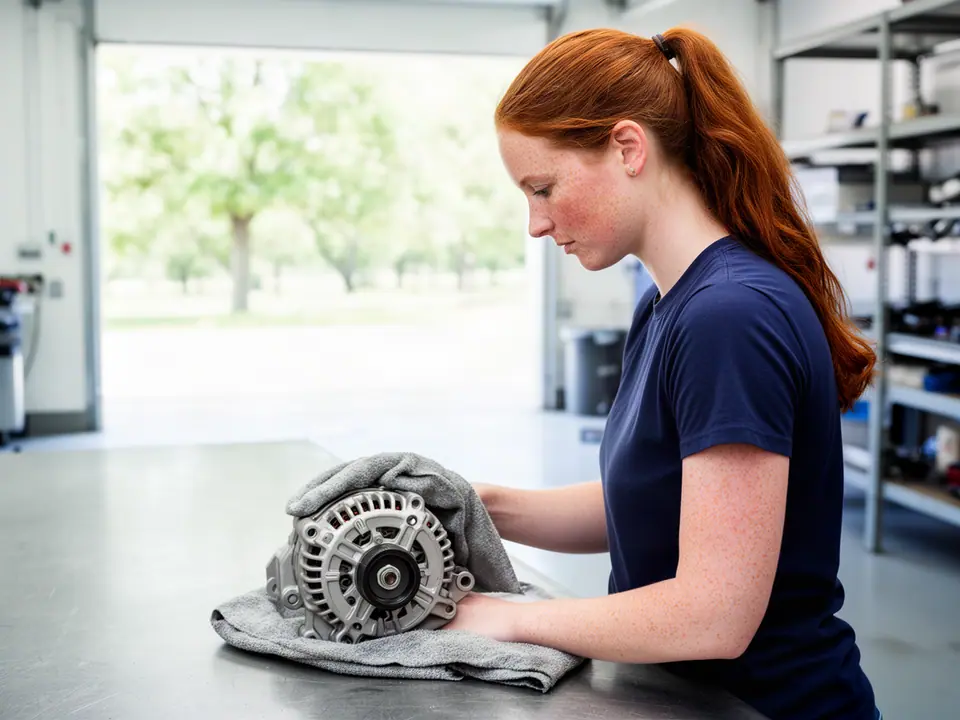
Equipment lenders and dealer programs fund a machine against itself and can suit smaller amounts and shorter terms. In an invented case, a pizza kitchen adds a 60-quart mixer at $9,180 and a dough sheeter at $6,350, $15,530 together. Spread over 36 months at a 12.9% annual rate, the pair runs $522.52 a month in this invented example, $18,810.72 in all.
A large mixer may need its own circuit; that wiring is property work outside this site. More on kitchen equipment terms is on the equipment financing page, and restaurant cases are on the restaurants page.
Card-sales advances and their holdback in a kitchen that also takes cash
A merchant cash advance is not a loan: a funding source buys part of future card sales and collects a share of each day’s card receipts until a fixed total is reached. In this invented case a counter-service kitchen takes an $8,600 advance at a 1.36 factor, so $11,696 is to be collected at an 11% holdback.
The holdback applies to card sales, not to the cash in the drawer. With invented daily sales of $2,900, of which 70% is on cards, the provider collects $223.30 a day and reaches the total in 53 days of sales in this example. If the same share were taken from all $2,900, it would take 37 days in the same invented case. The cost, $3,096 in this invented case, stays the same either way; only the pace changes.
Advances of this kind suit a short need that card sales can cover, such as a one-off repair. For wages or stock with a known payback date, working capital with a fixed payment may cost less.
Restaurant offers side by side: cost per $1,000 received
| Source and case | Received | Total cost | Cost per $1,000 | Paid back over |
|---|---|---|---|---|
| Bank loan: food truck | $71,900 | $22,963.60 | $319.38 | 72 months |
| Equipment loan: mixer and sheeter | $15,530 | $3,280.72 | $211.25 | 36 months |
| Card-sales advance | $8,600 | $3,096 | $360.00 | 53 days of card sales |
The advance costs the most per $1,000 in this invented comparison and is gone soonest. The invented food truck costs $319.38 per $1,000 because the money stays out for six years. Before comparing offers, a restaurant can line up its last few months of bank and card processing statements, which show the daily card share and any payments already going out.
By Rowanharbor Finance · Updated